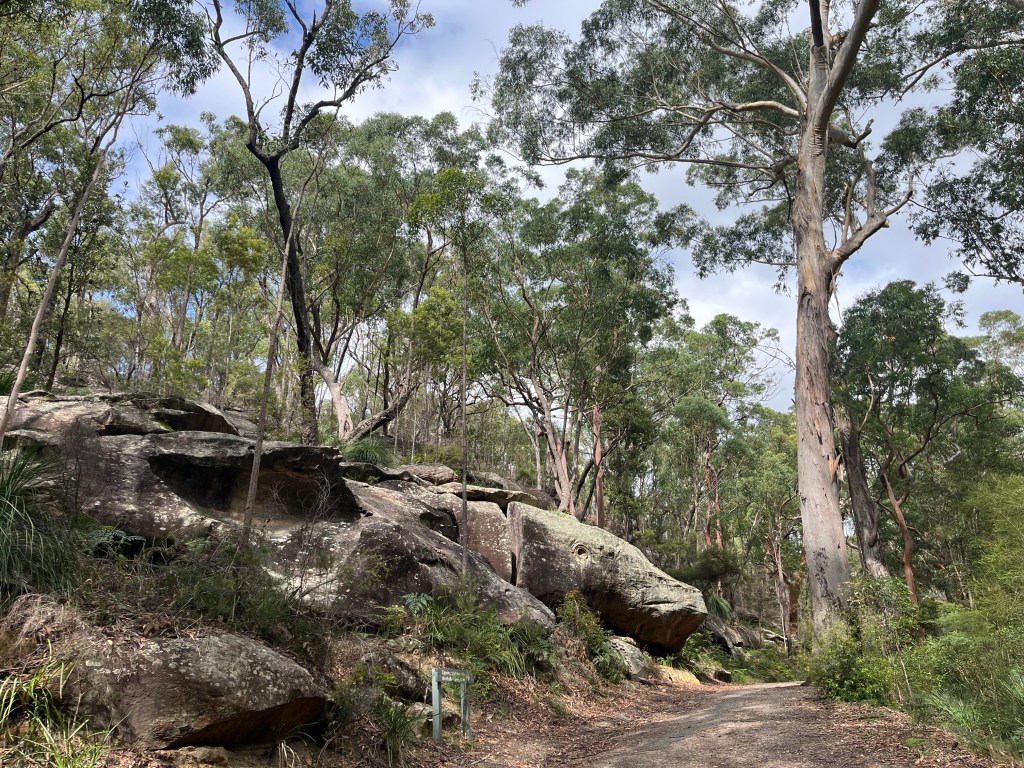
7 Mar 2026 📍Lane Cove National Park
- 7 Mar 2026 📍Lane Cove National Park
- 14 Mar 2026 📍Cabarita Beach
- 22 Mar 2026 📍Olympic Park
7th March, fair and warm.
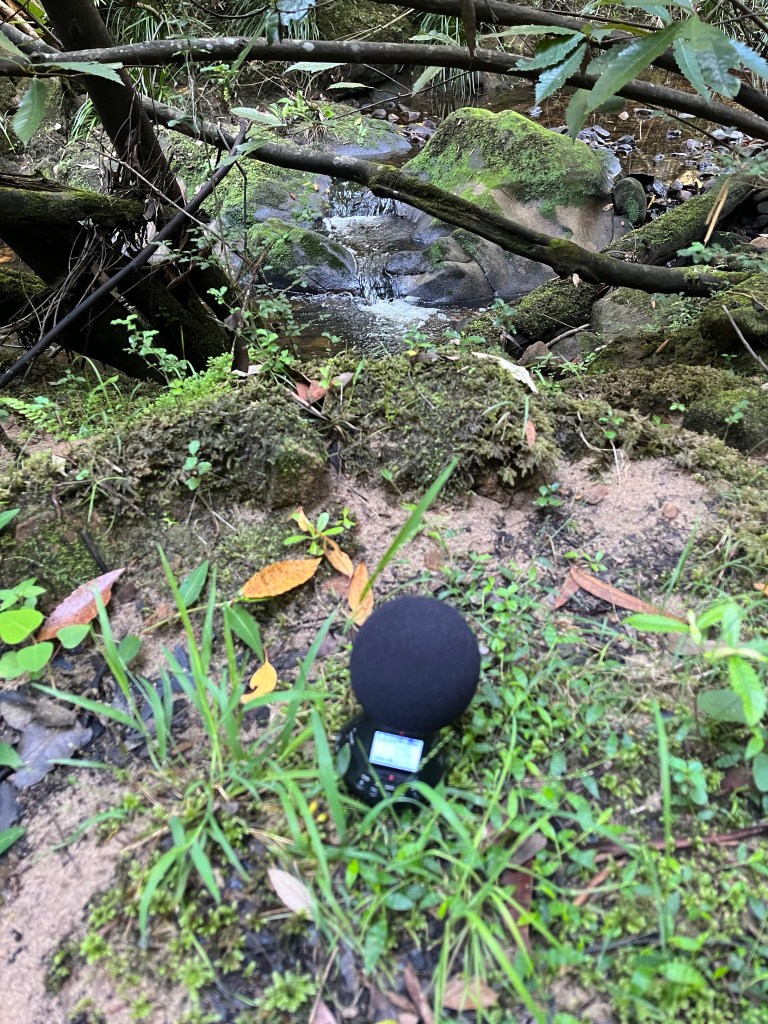
Walk through an expansive bushland in North Epping, the soundscape there is rich and layered. I found a spot by the stream and sat down, the symphony of nature gathered around me, sound spanning contrasting registers, articulated across layered textures, some sustained in legato, others punctuated in staccato.
Spectrogram of the recording.
The sound of water here forms a continuous acoustic field as background. However, the most interesting part of this recording is the birdsong, which operates as both foreground and background. When listening attentively, one can hear another layer of bird calls emerging from the distant bushland. Repeating and sufficiently dense, these calls gradually merge into the background soundscape. If it is difficult to hear here, the following recording, without the presence of water, unfolds more details.
The bird diversity here is remarkably diverse, with over 150 species recorded in the area. Their calls overlap and respond to one another in shifting layers. At 0:03, a fast descending figure responds to the two preceding chords, responding within the texture. At 0:11, it’s like an intro, leading into the next phrase… This is my favourite recording of the day, how beautiful it is.
However, I have to say, ugly bird calls for the first time I heard(in the first recording). I’m really curious what they were up to at that time.
If you don’t listen intentionally, then you’ll miss this fortune. The surrounding sounds recede into the background, while only the voices of your companions or the music in your headphones come into the foreground. This is the power of listening.
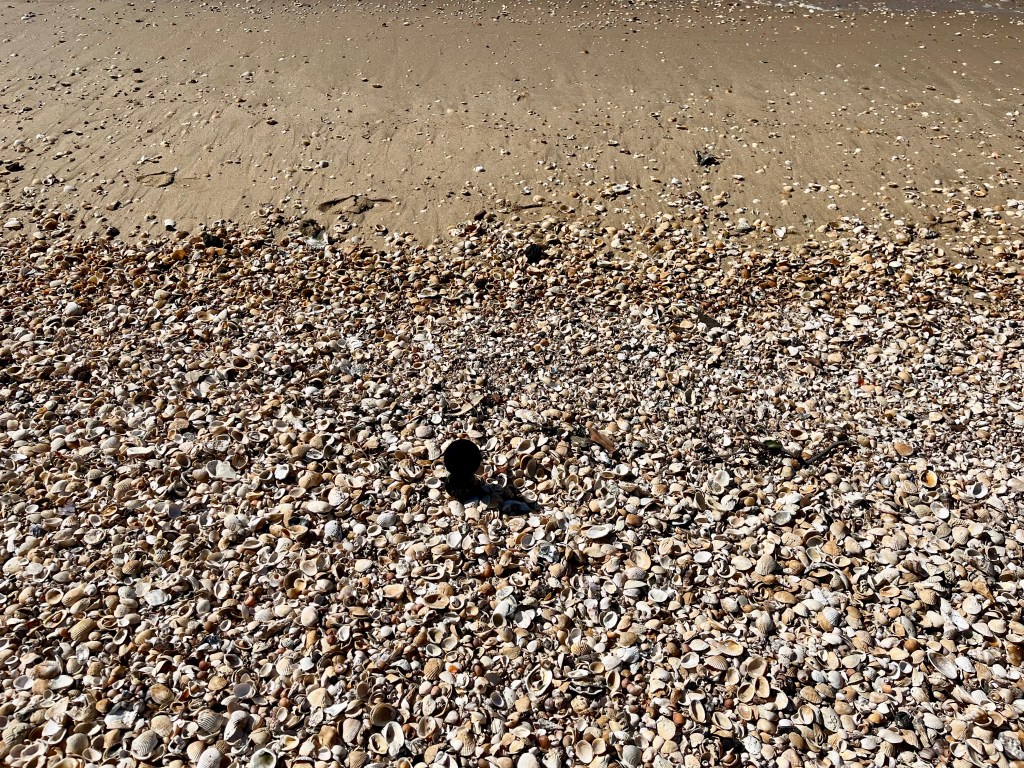
14 Mar 2026📍Cabarita Beach
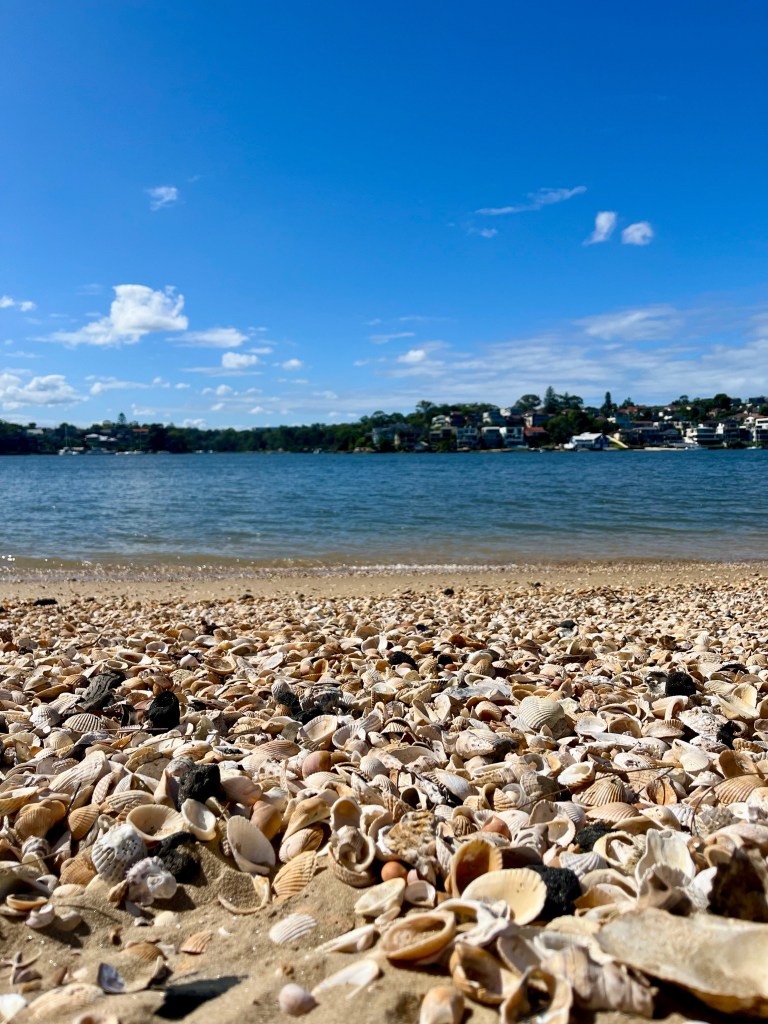
14th Mar, sunny and bright
I came across a beach covered entirely with shells of many different kinds in the Cabarita Park. Toward the latter part of the recording, the tide begins to rise, the waves gradually building until they reach the point where I was standing. The only drawback was that I couldn’t find a recording location without human sound.
22 Mar 2026 📍Olympic Park
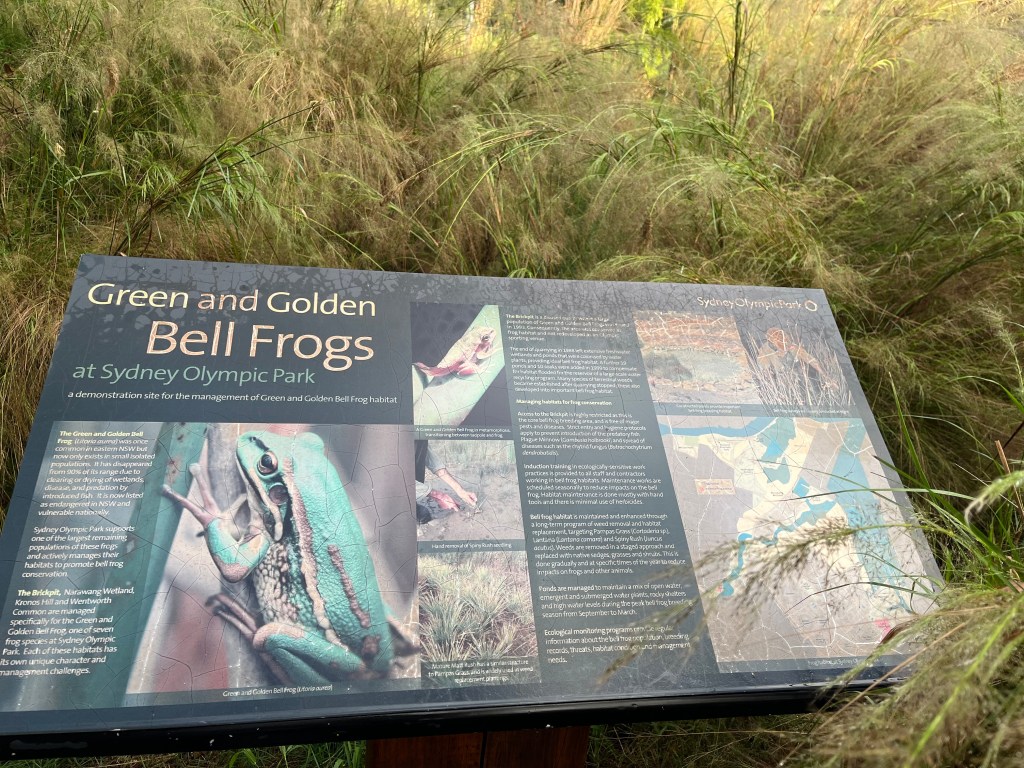
Did you know? (Brickpit info panel)
- Frogs are the only amphibians native to Australia.
- Amphibian comes from the Greek word amphibious meaning ‘leading a double life.’
- The brickpit contains the oldest rocks in Sydney, and the bricks that supplied nearly 60% of the bricks used to build Sydney’s homes
22 Mar, on and off rain.
There was heavy rain last night, and I wondered if this damp, saturated air might be the perfect moment to encounter frogs. Therefore, I made my way to the Brickpit, Olympic Park.
You might ask — why come to a brickpit to look for frogs?
Hahaha, the answer lies in history.
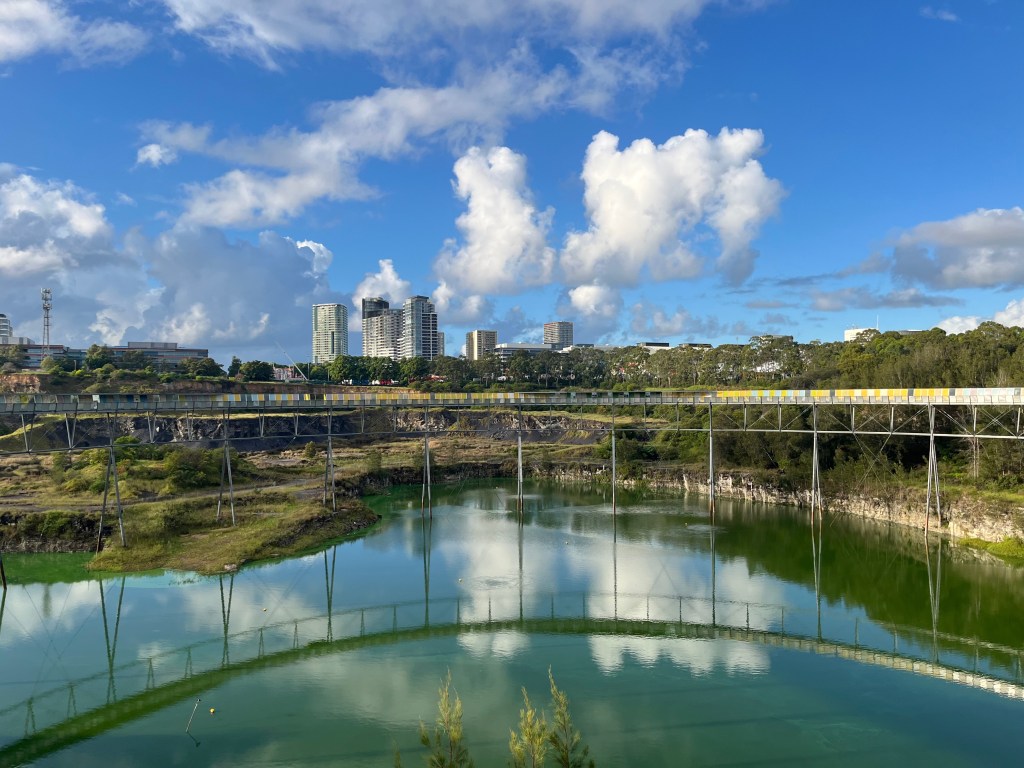
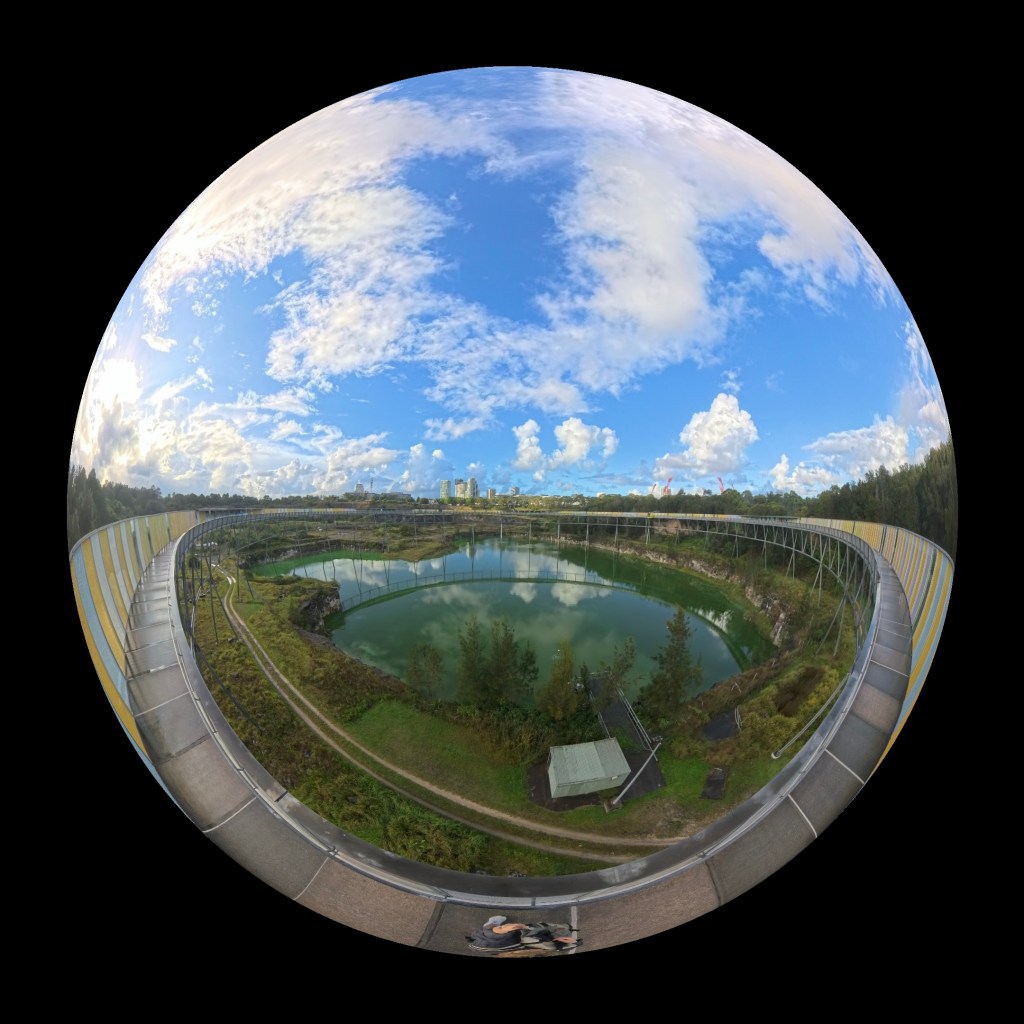
This used to be an industrial site, digging clay and making bricks, that helped build 60% of Sydney, literally. For decades, the ground here was carved out, layer by layer, until it became a vast hollow.
Years later, when plans were underway to redevelop the area for the 2000 Sydney Olympic and Paralympic Games.
And then, unexpectedly, they found frogs.
Not just any frogs, but the (then) endangered Green and Golden Bell Frog.
That discovery changed everything.
Instead of building over the site, the pit was preserved, protected, and eventually transformed into a managed habitat.
This is a place of listening, filled with calls, echoes, and fragile life that almost went unnoticed. Shortly after wandering through Brickpit, the rain would fall abruptly under full sunlight, like water being poured from above.
Before I reached my next recording site, a sudden downpour forced me to take shelter in the car, where I recorded the rain instead. The thunder came shortly after but it’s a pity I stopped recording 30 secs before.
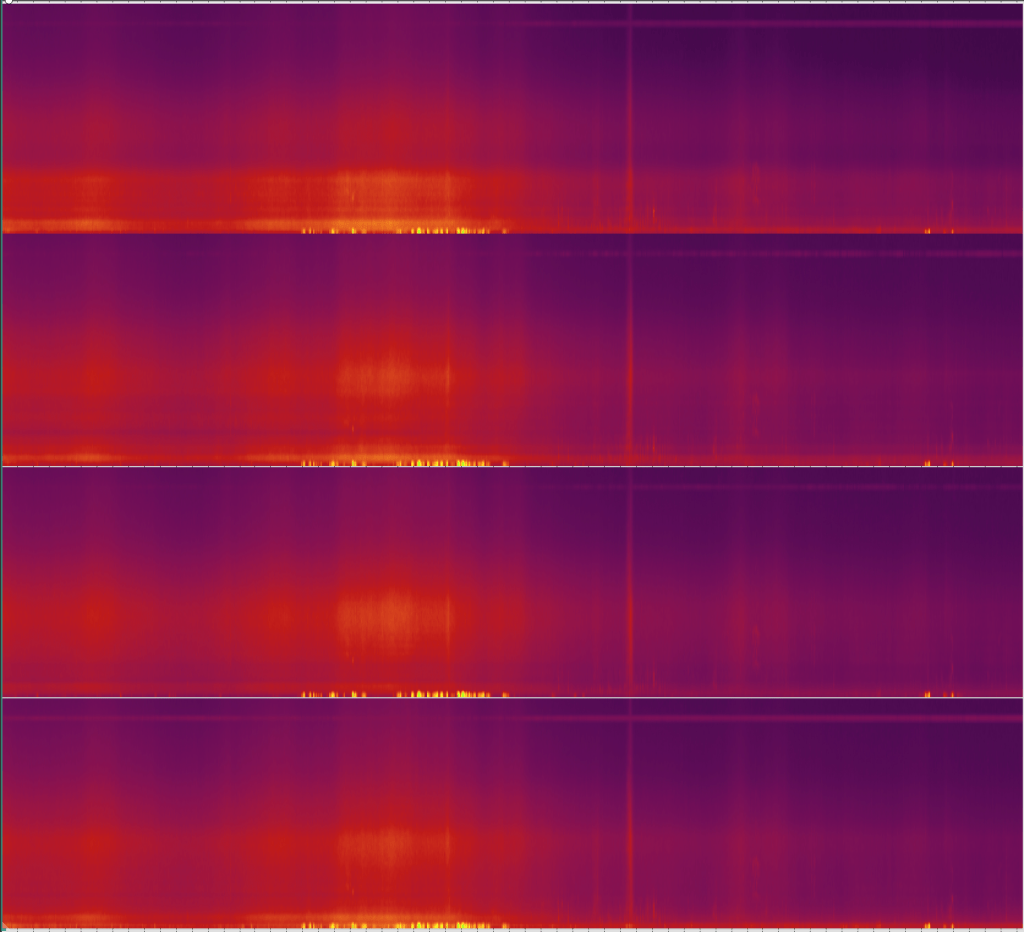
The spectrogram is clean and even when it comes to rain. I was thinking… as the rain intensified, the birds fell silent. Where do they go? Do they need to shelter from the rain just like us? Are feathers waterproof? If the sound of rain occupies parts of the acoustic niche of birds, does it also occupy that of frogs? If not, then frogs must, in some way, adapt their calls to remain perceptible to mate and communicate.
The time I spent in shelter from the rain, I suddenly came up with convergent evolution — how different species, without ever encountering one another, can evolve similar traits, like the eyes of octopuses and humans. Because we are all searching for the optimal form of survival, if we do not evolve in this way, we may face extinction. And this optimal form will be the same answer for all of the creatures.
So, are we really as unique as we believe? Could it be that the emergence of humans is, in some sense, inevitable — that even without us, another species might have arisen, capable of language, thought, and the building of cities? What, then, is our relationship with nature?
For humans, contentment is like a friend we never get to see. We could not reverse the bad state of our mind, but at least we can pause it when emerge ourself in nature. If soundscape is defined as being shaped by perceptual and contextual factors(ISO), can the received sonic environment in turn reshape those contextual conditions? Uh-huh, Just listening…


发表评论